
Demystifying Your Milk Supply: A Midwife’s Guide to Abundance and Your Postpartum Village

By Anne Leclercq, Midwife & IBCLC

Every new mother asks themselves the big question at some point: “Am I producing enough milk for my baby?”
As a midwife and International Board Certified Lactation Consultant (IBCLC) with over 20 years of experience, I want to reassure you: this worry is incredibly common, completely normal, and often easily navigated when you have the right information and a supportive village around you.
At Birth Gardens, we believe that understanding your body and your baby is the key to transforming this time of uncertainty into one of confidence and joy. Let's dive deep into the science of milk supply, how to track your baby's satisfaction, and the pillars of establishing a robust milk supply.
1. What to Expect: The Milk Supply Timeline
Your milk supply is not static; it is a beautifully dynamic system that changes daily to meet your baby's growing needs. Let's break down what is happening in those crucial first weeks:
The First 3 Days (The Colostrum Phase): During pregnancy (usually between 12 to 18 weeks), your body begins producing colostrum. This "liquid gold" is thick, highly concentrated, yellow, and small in quantity. There is no expectation of large volumes here. I love to teach mothers how to perform manual expression during pregnancy (starting after 37 weeks) to build hand-sensations and confidence before the baby arrives. Note that having a lot of colostrum during pregnancy does not guarantee or determine your postpartum supply—everyone's body reacts uniquely!
Day 3 (Transitional Milk): Around day three, your body transitions to transitional milk—a mix of colostrum and mature milk. It increases in quantity and becomes more watery and higher in fat. At this stage, your baby is expected to transfer about 1 ounce (30 ml) per feeding.
Day 6 (Mature Milk): By day six, mature milk is established. The expectation is around 2 ounces (60 ml) per feeding.
Weeks 3–4 (Established Mature Milk): By this point, your baby will transfer an average of 3 to 4 ounces (90–120 ml) per feeding, nursing about 8 to 12 times a day. Interestingly, breastfed babies tend to consume a relatively consistent volume of milk throughout their breastfeeding journey; they simply decrease the frequency of feeds as their efficiency increases.
2. Is My Baby Getting Enough? The Golden Rule of Tracking
The most reliable way to know if your baby is getting enough milk in the first weeks is to look at what goes in versus what comes out.
Wet & Dirty Diapers: During the first two weeks, tracking void and bowel movements is critical. While you might hear that breastfed babies don't need to poop every day, that is not true in the first few weeks. Frequent, yellow, seedy stools and wet diapers are the best indicators that your baby is successfully transferring milk and that your breasts are getting the stimulation they need.
3. The Three Pillars of a Robust Milk Supply
A healthy milk supply is built on a foundation of three critical components: stimulation, hormonal balance, and glandular tissue health.
Pillar 1: Good Stimulation (The Latch and the Flange)
Milk production operates on a supply-and-demand basis. To establish a strong supply, you need at least 8 to 12 breast stimulations per 24 hours.
A Deep Latch: We assess the baby’s mouth and oral motor skills. A wide-open mouth and an active tongue cupping the nipple are essential for effective milk transfer.
Proper Flange Sizing: If you are pumping, the fit of your breast pump flange is primordial. An eye-opening study by Jeanette Mesite Frem (Babies in Common) highlights the importance of choosing the correct materials and flange sizes to prevent tissue damage and optimize expression (read the study here). You can measure your nipple with a simple ruler and download this useful Flange Fits Guide to find your match.
Pillar 2: Perfecting Your Hormonal Balance
Lactation is guided by an intricate hormonal dance.
Prolactin (The Producer): Secreted by the pituitary gland, its main job is to synthesize milk.
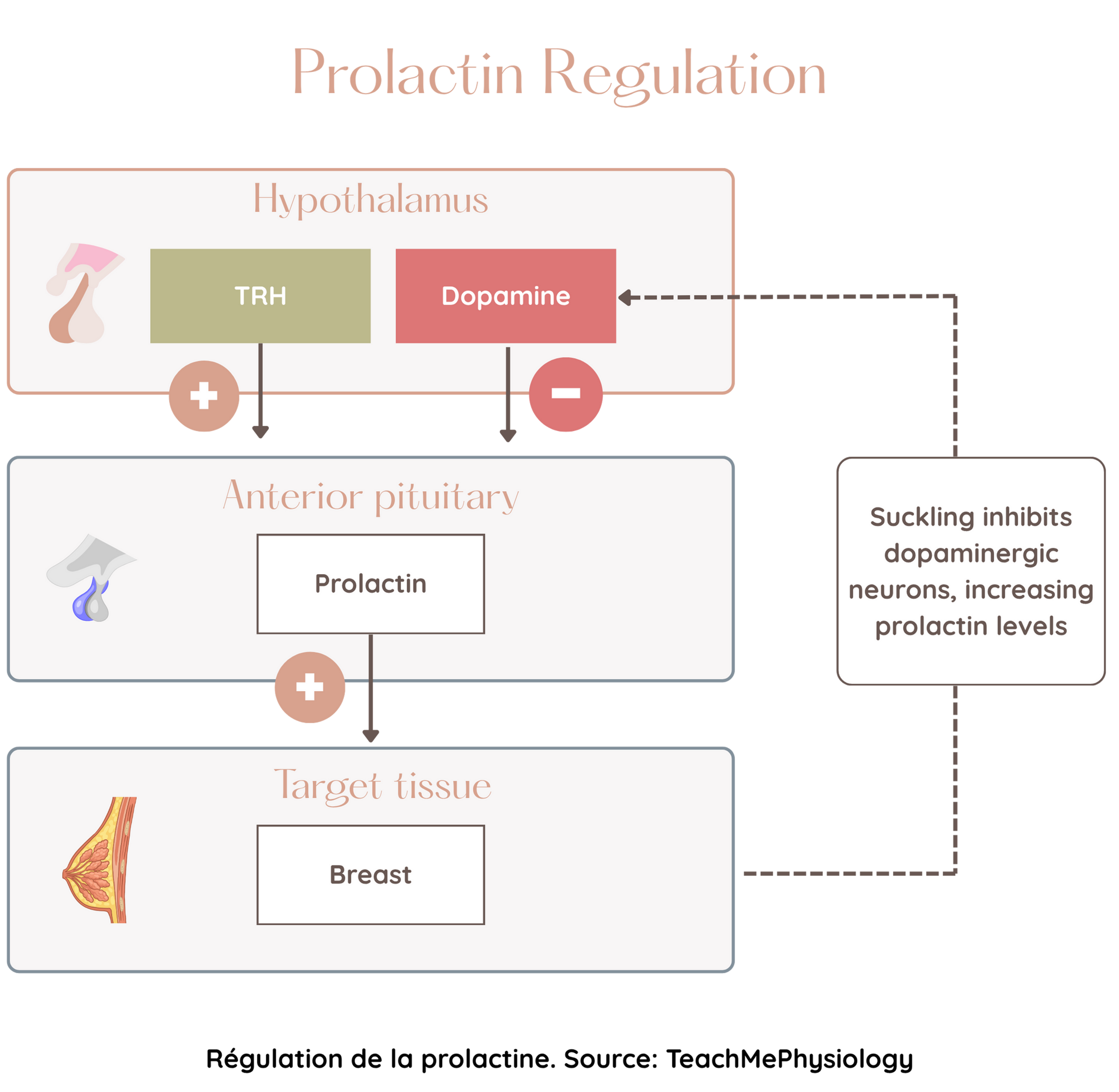
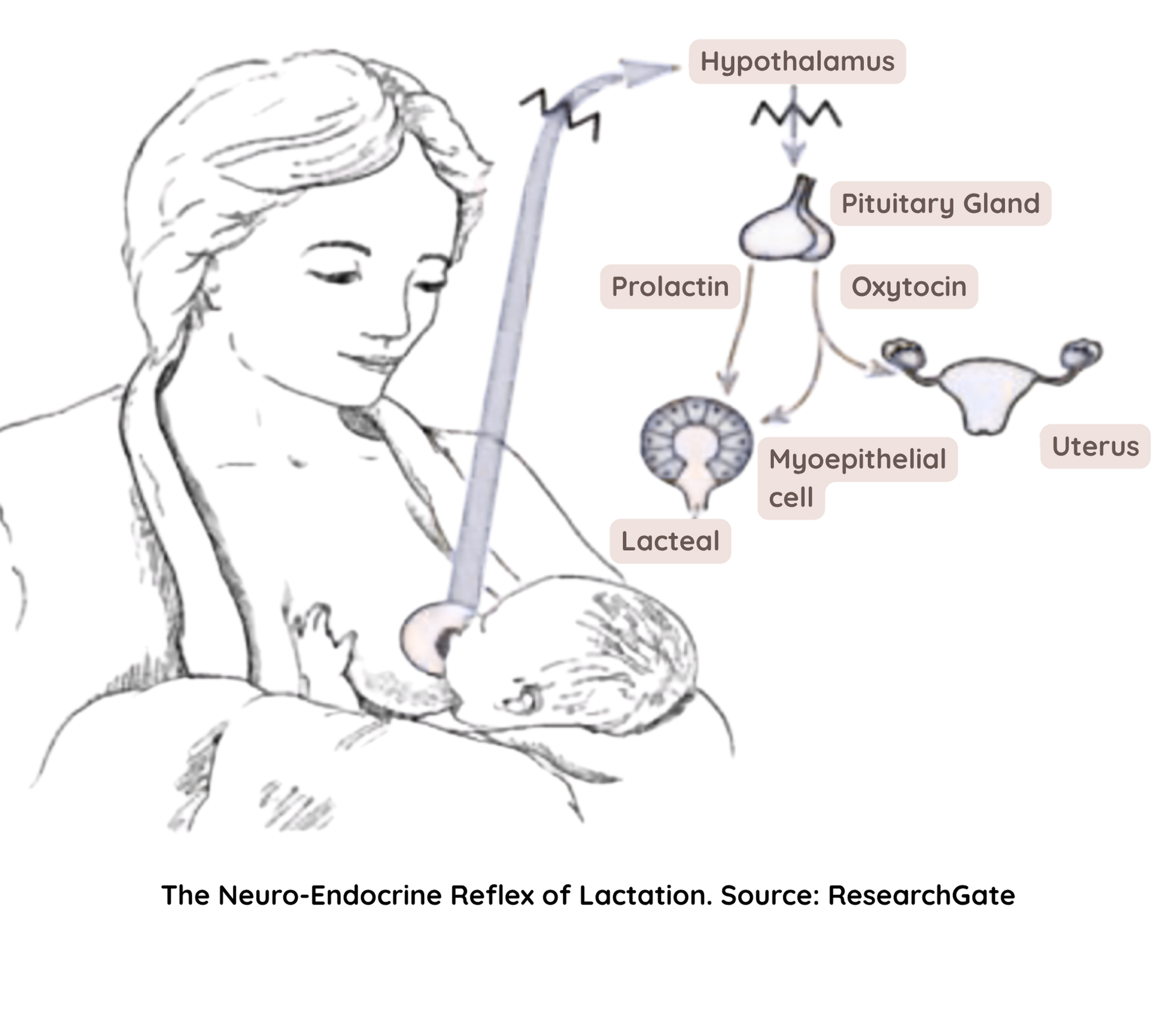
Oxytocin (The Flow Driver): When your baby suckles, sensory nerves signal the brain to release oxytocin, which contracts the tiny smooth muscles (myoepithelial cells) surrounding the milk sacs, pushing the milk out. This is the "let-down" reflex.
Other Supporting Hormones:
Progesterone & Estrogen (The Brakes): High during pregnancy, they block milk production. Delivery of the placenta triggers a sharp drop in progesterone, giving prolactin the green light. Retained placenta or early estrogen-based contraceptives can disrupt this transition.
Thyroid Hormones (T3, T4, TSH): Hypothyroidism or hyperthyroidism can interfere with the prolactin cycle. Postpartum thyroiditis is a common hidden cause of a sudden drop in milk supply.
Insulin: Essential for metabolizing glucose into lactose. Conditions causing insulin resistance (PCOS, Type 2 diabetes, gestational diabetes) can delay the onset of milk or cause under-supply.
Cortisol & Adrenaline (Stress Hormones): High stress levels trigger adrenaline, which physically blocks oxytocin and traps milk in the breasts. If milk remains trapped, your body assumes it isn't needed, and overall production drops.
Human Placental Lactogen (hPL): Helps develop the mammary glands prenatally. Low levels can indicate underdeveloped glandular tissue.
Pillar 3: Glandular Tissue Health
The physical shape and health of your breast tissue set the potential for milk production.
Hypoplasia (Insufficient Glandular Tissue / IGT): Visual indicators include tubular, thin, widely spaced (more than 4 cm apart at the sternum), or significantly asymmetric breasts, or unusually bulbous areolas.
Previous Surgeries: Past breast reductions, augmentations, biopsies (especially periareolar incisions around the nipple), or radiation therapy can disrupt duct networks and nerves, affecting the let-down reflex or direct production.
Guiding the Plan: Recognizing these factors early allows us to set realistic expectations. We can integrate early interventions like manual expression, skin-to-skin contact, galactagogues, or a Supplemental Nursing System (SNS) while prioritizing a beautiful bonding relationship with your baby.
4. You Don’t Have to Do This Alone: How Birth Gardens Supports You
Parenthood and breastfeeding are not automatic; they are a learned dance between you and your baby. At Birth Gardens, we have designed a comprehensive ecosystem of care to hold, inform, and guide you through every phase: Prepare, Recover, Nourish, and Thrive.
🌟 Personalized Lactation Visits (In-Person & Virtual)
If you are struggling with a painful latch, flange sizing, low milk supply, or simply want hands-on reassurance, our team of IBCLCs is here for you.
Our Locations: We offer in-home visits across the Austin area, office visits or convenient virtual consultations.
Insurance Coverage: We are proud to be in-network with Aetna, United Healthcare, Oscar, Cigna, Tricare, Curative, and BCBS (through the Lactation Network), making expert care highly accessible and covered.
📚 Our Online Course: From Nesting to Nurturing
Prefer self-paced, robust digital support? Our signature online program is a virtual journey (Prepare, Recover, Nourish, Thrive) that guides you through the first forty days and beyond. Complete with instructional videos, journaling prompts, downloadable resources, and templates, it covers everything from basic breastfeeding mechanics to pumping, milk storage, and postpartum lifestyle adjustments.
🤍 The Joyful Motherhood Collective & Weekly Meetings
Motherhood requires a village. When you join the Joyful Motherhood Collective, you aren't just getting a course—you are stepping into a warm, supportive community.
Weekly Live Meetings: Connect with other mothers and participate in our weekly group calls.
Expert Guest Speakers: We host rotating expert guest speakers to cover every aspect of your wellness, including:
Pelvic Floor Physical Therapists (assessing core and perineal healing)
Certified Doulas (labor comfort measures and partner support)
Perinatal Mental Health Therapists (navigating baby blues and postpartum wellness)
Gentle Infant Sleep Consultants (safe bed-sharing and biological sleep norms)
Holistic Perinatal Nutritionists (maternal healing diets and meal planning)
Pediatric Chiropractors & Bodyworkers (infant tension, flat-head syndrome, and oral ties)
Whether you need a quick tip for a better latch today or are looking for a lifelong village, we are here to hold your hand.
👉 Ready to take the next step?


Comments